
Empower your Business with Cloud Services
Cloud Services
Cloud services refer to the broad category of services delivered over the internet ("the cloud") that provide various computing resources and functionalities on demand. These services are typically provided by cloud service providers (CSPs) who manage and maintain the underlying infrastructure, allowing users to access and use computing resources without the need for owning physical hardware or infrastructure.
Here's a detailed explanation covering the wide range of cloud services available:
Categories of Cloud Services
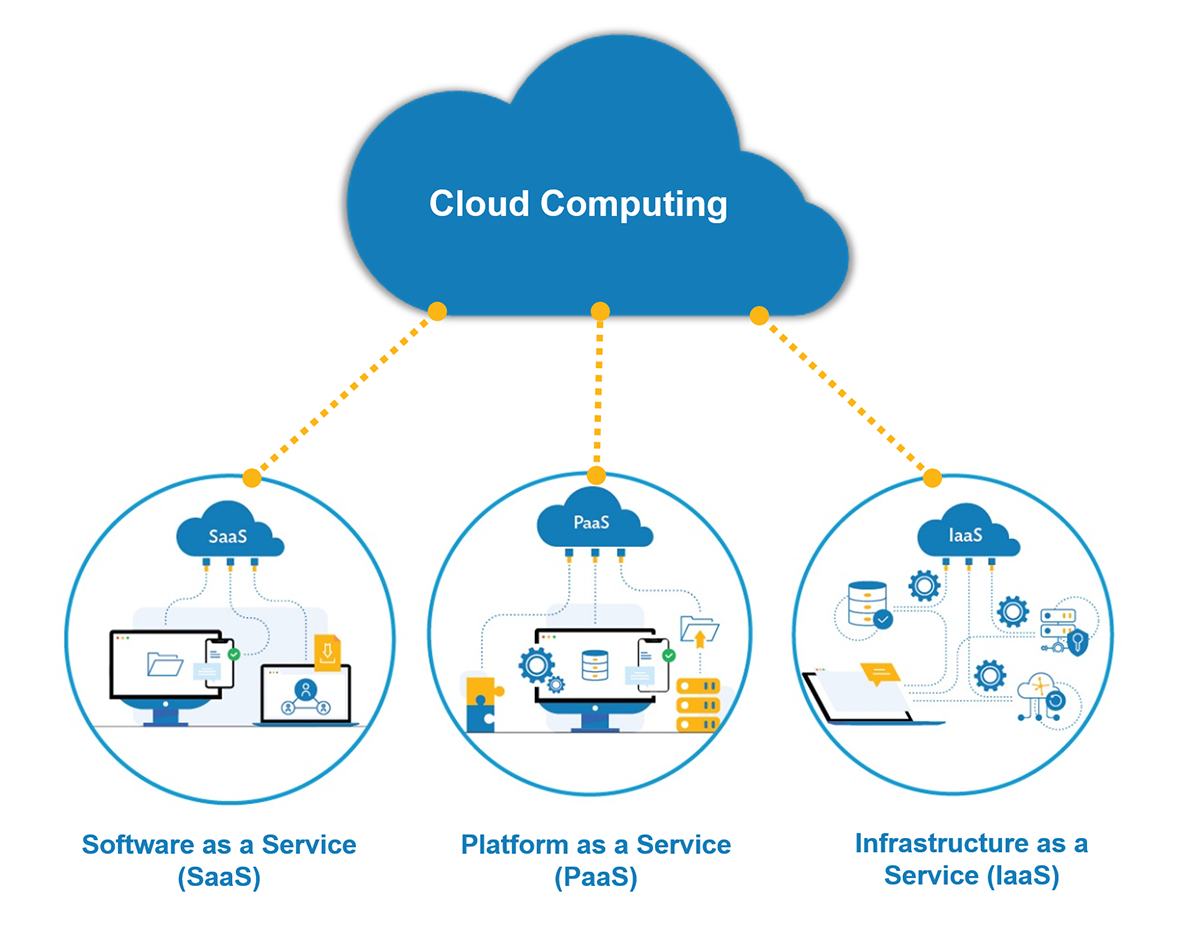
1. Infrastructure as a Service (IaaS):
Provides virtualized computing resources over the internet. Users can rent virtual machines, storage, networks, and other fundamental computing resources on a pay-as-you-go basis. Examples include:
- Compute Services: Virtual machines (VMs), containers, and serverless computing platforms (e.g., AWS EC2, Azure Virtual Machines, Google Compute Engine).
- Storage Services: Block storage, object storage, and file storage (e.g., AWS S3, Azure Blob Storage, Google Cloud Storage).
- Networking Services: Virtual networks, load balancers, and content delivery networks (e.g., AWS VPC, Azure Networking, Google Cloud Load Balancing).
2. Platform as a Service (PaaS):
Provides a platform allowing customers to develop, run, and manage applications without the complexity of building and maintaining the underlying infrastructure. Key features include:
- Development Tools: Integrated development environments (IDEs), source code repositories, and continuous integration/continuous deployment (CI/CD) pipelines (e.g., AWS Elastic Beanstalk, Azure App Service, Google App Engine).
- Database Services: Managed database solutions such as relational databases (SQL) and NoSQL databases (e.g., AWS RDS, Azure SQL Database, Google Cloud Firestore).
- Middleware Services: Messaging queues, caching services, and enterprise service buses (e.g., AWS SQS, Azure Service Bus, Google Cloud Pub/Sub).
3. Software as a Service (SaaS):
Delivers software applications over the internet on a subscription basis, eliminating the need for users to install and maintain software locally. Popular examples include:
- Productivity Tools: Email, collaboration tools, and office productivity suites (e.g., Microsoft Office 365, Google Workspace).
- Customer Relationship Management (CRM): Sales, marketing, and customer support applications (e.g., Salesforce, HubSpot).
- Enterprise Resource Planning (ERP): Business process management applications for finance, HR, and operations (e.g., SAP S/4HANA, Oracle ERP Cloud).
Cloud Services
Additional Cloud Services
Besides the core IaaS, PaaS, and SaaS offerings, cloud providers also offer specialized services to cater to specific use cases and industries:
- Big Data and Analytics: Services for storing, processing, and analyzing large datasets, including data warehousing, data lakes, and real-time analytics (e.g., AWS Redshift, Azure Synapse Analytics, Google BigQuery).
- AI and Machine Learning: Pre-trained models, frameworks, and APIs for integrating artificial intelligence and machine learning capabilities into applications (e.g., AWS SageMaker, Azure Machine Learning, Google AI Platform).
- IoT (Internet of Things): Managed services for collecting, storing, and analyzing IoT data, as well as for managing IoT devices and applications (e.g., AWS IoT, Azure IoT Hub, Google Cloud IoT Core).
- Security and Identity: Services for identity and access management (IAM), encryption, threat detection, and compliance monitoring to enhance cloud security (e.g., AWS IAM, Azure Active Directory, Google Cloud Identity).
- Blockchain: Managed blockchain services for creating, managing, and deploying blockchain networks and applications (e.g., AWS Blockchain Templates, Azure Blockchain Service, Google Cloud Blockchain).
- Serverless Computing: Platforms that allow developers to deploy code without managing underlying infrastructure, scaling automatically based on demand (e.g., AWS Lambda, Azure Functions, Google Cloud Functions).
Key Characteristics of Cloud Computing
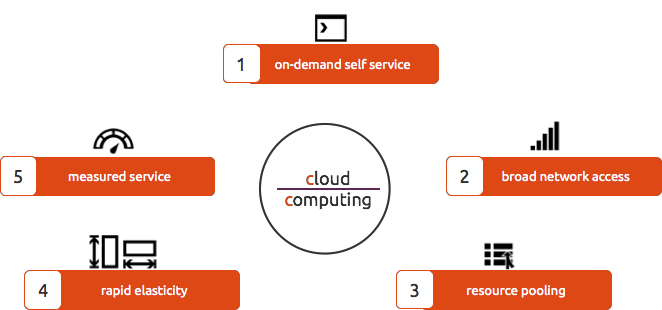
1. On-Demand Self-Service:
Users can provision and manage computing resources (e.g., servers, storage, databases) without human intervention from the service provider.
2. Broad Network Access:
- Services are accessible over the network and can be accessed through standard mechanisms (e.g., web browsers, APIs).
3. Resource Pooling:
- Computing resources are pooled to serve multiple users and can be dynamically assigned and reassigned according to demand.
4. Rapid Elasticity:
- Computing resources can be rapidly scaled up or down based on workload demands, often automatically, allowing for flexibility and efficiency.
5. Measured Service:
- Cloud systems automatically control and optimize resource usage by leveraging metering capabilities, providing transparency for both providers and consumers.
Cloud Services
Benefits of Cloud Services
Cloud Computing spans various industries, each requiring tailored solutions to meet specific needs:
- Cost Efficiency: Pay-as-you-go pricing and economies of scale reduce capital expenditure on infrastructure.
- Scalability: Easily scale resources up or down based on demand without significant upfront investment.
- Flexibility and Accessibility: Access data and applications from anywhere with an internet connection.
- Reliability and Disaster Recovery: Built-in redundancy and disaster recovery options ensure high availability and data protection.
- Innovation and Time-to-Market: Rapid provisioning of resources allows faster deployment of applications and services.
Cloud Services
Challenges and Considerations
- Security: Data breaches, data loss, and compliance with regulations (e.g., GDPR, HIPAA).
- Performance: Network latency and application performance can be affected by cloud provider location and architecture.
- Vendor Lock-In: Dependency on a single cloud provider can limit flexibility and increase costs.
- Data Transfer Costs: Charges for data transfer between cloud services or between on-premises and cloud environments.
Future Directions
Edge Computing: Bringing computation and data storage closer to the location where it is needed to improve response times and save bandwidth.
Serverless Computing: Executing code in response to events without provisioning or managing servers, allowing developers to focus on writing code.
AI and Machine Learning Integration: Cloud providers offering AI and ML services that leverage vast amounts of data stored in the cloud.
In summary, cloud computing has revolutionized how businesses and individuals consume computing resources, offering a scalable and cost-effective alternative to traditional on-premises infrastructure. As technology advances, cloud computing continues to evolve, offering new capabilities and opportunities for innovation across various industries worldwide.